

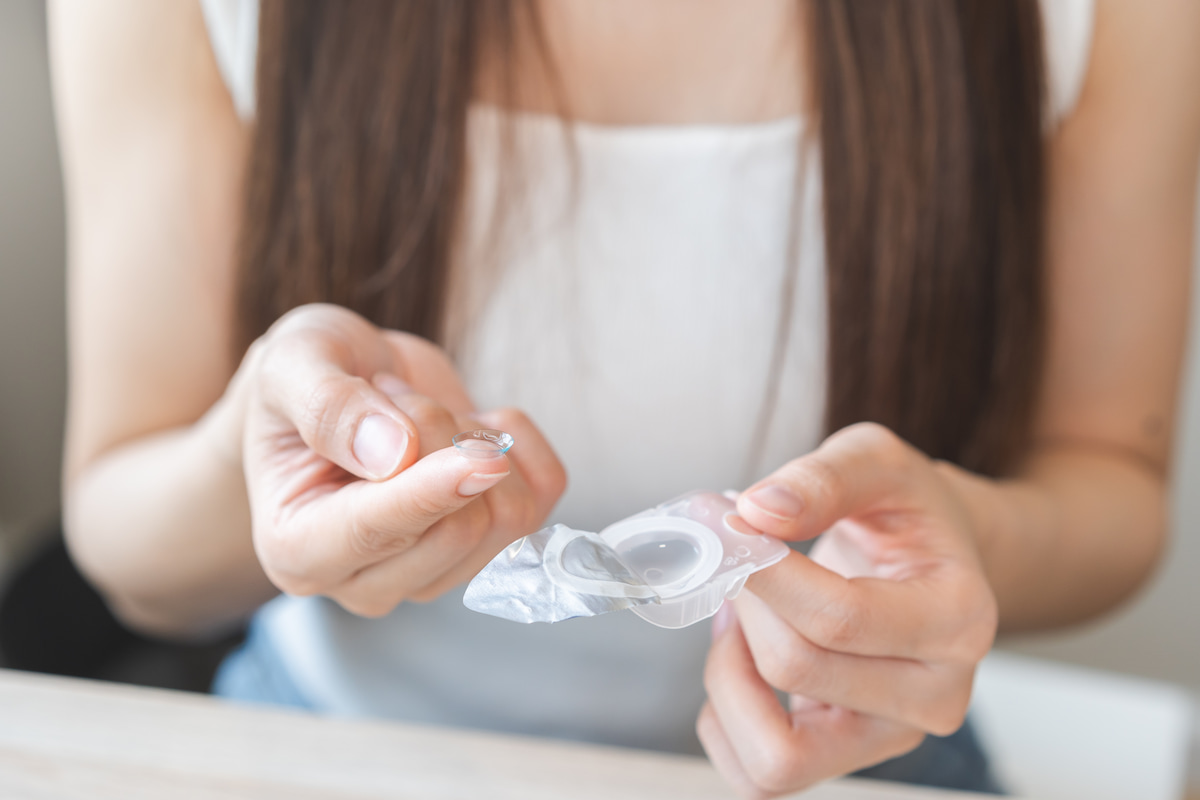
Choosing between daily and monthly contact lenses is not just about how often you replace them. The better option depends on how often you wear contacts, how your eyes feel at the end of the day, whether you have allergies or dry eye, and how reliably you can follow a lens-care routine.
A contact lens exam can help match your lens type to your prescription, eye health, and real-life routine.
Daily lenses may fit active or occasional wearers
Daily disposable lenses are often a strong fit for people who do not wear contacts every day. If you mainly wear lenses for workouts, weekends, special events, or sports, opening a fresh pair only when you need one may be more practical than maintaining a monthly lens supply.
They can also simplify life for people who travel often, have unpredictable schedules, or are less likely to keep up with cleaning and replacement dates. Since each pair is discarded after wear, there is no case to clean, no solution to buy, and less time for deposits to collect on the lens surface.
For many people with seasonal allergies, a fresh lens each day can also mean less pollen, makeup, oil, and protein buildup sitting against the eye.
Dry eye can affect the decision
Dry eye does not automatically mean you need daily lenses, but replacement frequency can affect comfort. A monthly lens can collect deposits over time, even with good cleaning habits. For someone whose contacts become dry, blurry, or irritating late in the month, switching to a fresh lens every day may help reduce that buildup.
That said, lens material and fit matter just as much as the schedule. Some monthly lenses may work well for dry eye, while some daily options may not be the right material or prescription for every patient. Persistent dryness deserves an evaluation rather than a guess based on the replacement schedule alone.
Monthly lenses can make sense for consistent wearers
Monthly lenses can be a practical choice for people who wear contacts most days and are comfortable with a nightly cleaning routine. They may have a lower lens cost per day than daily disposables, though solution, cases, and cleaning supplies should also be considered when comparing overall cost.
They can also be available in more specialized designs or prescription ranges. Depending on your needs, that may include options for higher prescriptions, astigmatism, multifocal vision, or custom fits. Daily lenses are available in many of these categories too, but the available parameters vary by brand and prescription.
The tradeoff is upkeep. Monthly lenses need to be removed, cleaned with fresh solution, stored correctly, and replaced on time. Wearing them beyond their intended schedule — even if they still feel comfortable — can increase deposits and irritation.
Your prescription is only part of the answer
The best contact lenses should fit your eyes and your habits. Your eye doctor will consider your prescription, corneal shape, tear film, dry eye symptoms, allergies, lifestyle, wear frequency, and ability to follow a care routine.
Schedule a contact lens exam to find a lens option that supports clear, comfortable vision every day you wear it.


