

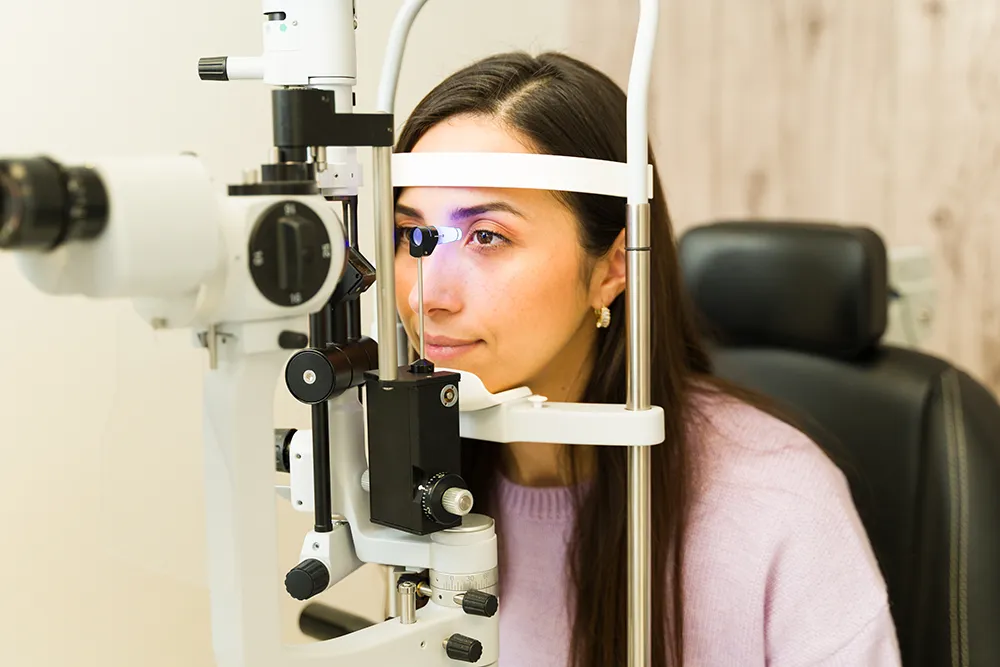
When was the last time you saw an eye doctor? If you only schedule an eye exam every few years, you might have an eye health issue and not realize it’s developing in the meantime.
Many vision and eye health changes happen gradually, without obvious symptoms at first. Regular eye exams in Peachtree Corners help catch those changes earlier, before they start affecting daily life.
In this blog, we share how often you should schedule eye exams, what factors can change that schedule, and the signs that you should see an eye doctor immediately.
How often should you see an eye doctor?
How often you need an eye exam will depend on your age and whether you have any risk factors that can affect eye health or vision. The American Optometric Association provides the following general guidelines¹:
Ages 18–39
- Low risk: every two years at a minimum
- Higher risk patients: yearly or as advised by your eye doctor
Ages 40–64
- Low risk: every two years at a minimum
- Higher risk patients: yearly or as advised by your eye doctor
Ages 65 and older
- Low risk: yearly exams
- Higher risk patients: yearly or more often if recommended
Risk factors that may require more frequent exams include diabetes, high blood pressure, a family history of eye disease, contact lens wear, or ongoing symptoms such as dry eye or vision changes.
Even if your vision seems stable, regular exams help track subtle changes that often develop before noticeable symptoms appear.
Why eye exams are important
It’s common to assume eyesight is normal until a routine exam shows otherwise. About 11 million Americans over age 12 need vision correction, even if they haven’t noticed a change in vision.²
Regular eye exams also help uncover eye diseases in their earliest stages. Conditions like glaucoma and macular degeneration can progress without obvious symptoms, making early detection especially important.
Routine exams can also help detect:
- Changes in prescription (glasses or contacts)
- Cataracts
- Retinal conditions
- Dry eye disease
- Focusing or eye teaming issues
Early detection allows for more treatment options and better long-term outcomes.
Signs you shouldn’t wait for an eye exam
Certain symptoms suggest your eyes need attention sooner rather than later. Schedule an exam promptly if you notice:
- Sudden or frequent blurry vision
- Eye pain or discomfort
- New or worsening headaches
- Light sensitivity
- Flashes of light or an increase in floaters
- Difficulty seeing at night or while driving
- Eye strain that worsens with screen use
- Redness or persistent irritation
- Changes in contact lens comfort
These symptoms indicate changes in eye health or vision that require evaluation.
Specialty care for complex vision needs
Regular eye exams help us identify when specialty care may be needed, such as specialty contacts or more advanced treatment. Some patients need more than standard glasses or contact lenses. Specialty contact lenses can help manage conditions such as astigmatism, dry eye, or irregular corneas, including keratoconus.
Dry eye treatment is also essential for maintaining comfort and clear vision. Symptoms like burning, fluctuating vision, or contact lens discomfort often improve with targeted care rather than over-the-counter drops alone.
Don’t wait for symptoms to appear
Many eye conditions develop slowly and without obvious warning signs. By the time vision changes become noticeable, the condition may already require more advanced care.
Scheduling regular visits gives your eye doctor the chance to track changes early and adjust care as needed, so vision stays as clear and comfortable as possible throughout life. If it’s been a while since your last exam, schedule today to ensure nothing important gets missed.
References:




